

New firmware has been released for the WiNG-MGR. Firmware files are available on our Firmware Updates and MIB Files page. Firmware Updates and MIB Files page Firmware Release Notes – WiNG-MGR
Tech Support
EIA-485 (formerly known as RS-485 or RS485) is a specification for the physical layer of a network that uses the difference in voltages between 2 wires. Simply, if one wire is high (digital 1) the other will be low (digital 0), and vice versa. This simplicity allows data to be transmitted up to 4,000 feet. … Continued
New firmware has been released for the LD5200. Firmware files are available on our Firmware Updates and MIB Files page. Firmware Updates and MIB Files page Firmware Release Notes – LD5200
New firmware has been released for the LD5200. Firmware files are available on our Firmware Updates and MIB Files page. Firmware Updates and MIB Files page Firmware Release Notes – LD5200
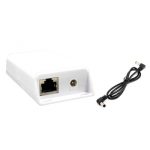
We’ve had several customers ask about using PoE splitters to power RLE devices, so we asked our Engineering Team to look into PoE options. They researched and tested a wide variety of devices and we’re now stocking and selling the 24V-POE-Kit. Our Engineering Team adds one very important note regarding PoE and RLE products: Due … Continued
We’re changing the terminology we use when we talk about integrating devices via protocols. The terms Master and Slave will no longer be used at RLE. Devices communicating via Modbus will be referred to as Client and Server devices, in alignment with direction from the Modbus Organization, Inc.: “The organization is using “client-server” to describe … Continued
New firmware has been released for the WiNG-MGR v2. Note that this firmware is for the WiNG-MGR v2 and is NOT compatible with the WiNG-MGR. Firmware files are available on our Firmware Updates and MIB Files page. Firmware Updates and MIB Files page Firmware Release Notes – WiNG-MGR v2
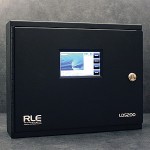
New firmware has been released for the LD5200 and LD2100. Firmware files are available on our Firmware Updates and MIB Files page. Firmware Updates and MIB Files page Firmware Release Notes – LD5200 Firmware Release Notes – LD2100

What Is An Isolated Power Supply and Which RLE Products Require One? If you’re looking at RLE leak detection, you’ll notice that certain RLE controllers and products state a requirement for an isolated power supply. Many users wonder about this requirement, and quite a few try to sidestep around it and then have issues with their … Continued
RLE Technologies customers often want to use our SD-R01 spot detector to drive an external load, like an audible alarm or a pump. RLE does not currently have a leak detection product with a powered output. The SD-R01, like other RLE Technologies leak detection products, has a non-powered output: a Form C relay output. The … Continued